
What Are OKRs?
OKRs stand for Objectives & Key Results, a goal-setting framework. It is a simple and powerful tool designed to foster alignment, focus, and accountability within organizations.
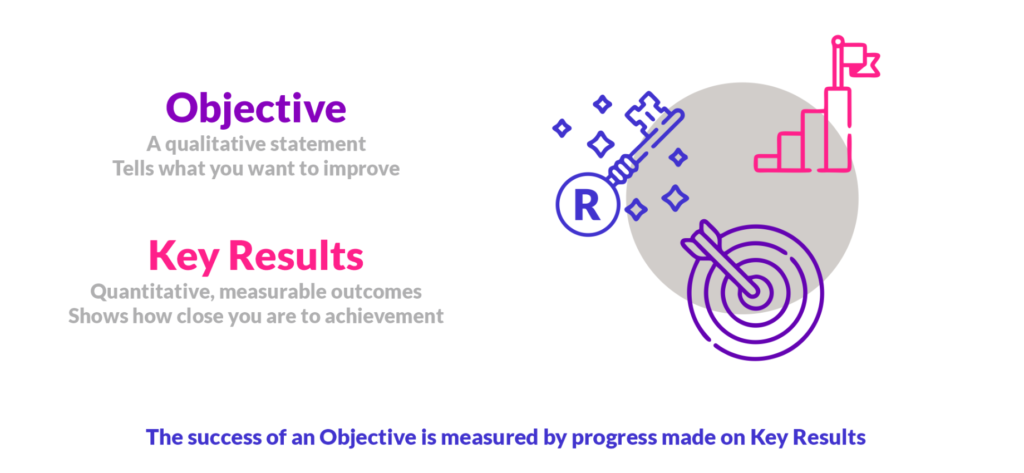
The essence of OKRs lies in their simplicity and transparency. OKRs are typically set every quarter, with regular check-ins & updates to monitor progress. They are meant to be ambitious yet achievable, pushing teams to stretch beyond their comfort zones and drive meaningful results.
Why Are OKRs Important?
OKRs offer several important benefits that make them a valuable tool for organizations.
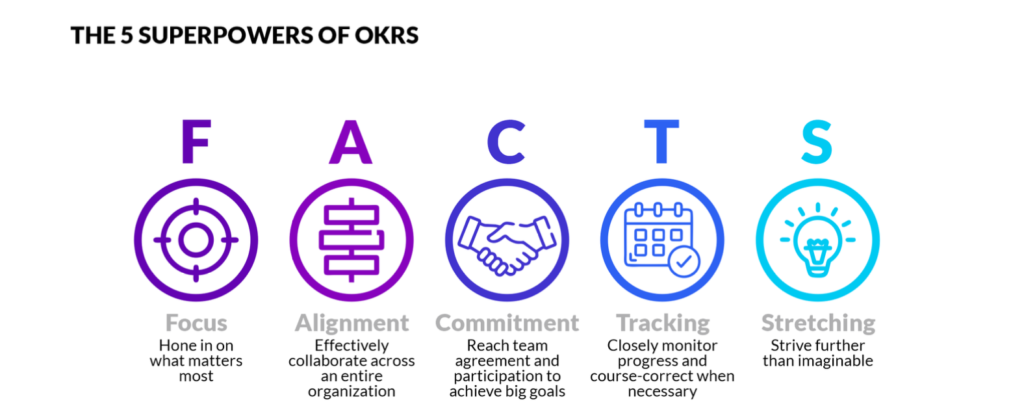
Alignment: OKRs help align the efforts of individuals and teams toward a common purpose. By setting clear OKRs, everyone can understand and work towards the strategic priorities.
Focus: With limited time and resources, organizations must identify and concentrate on the most impactful initiatives. The focus increases efficiency and improves the likelihood of achieving meaningful outcomes.
Accountability: when individuals & teams set their OKRs, they take ownership of their goals and become responsible for their outcomes. Accountability fosters a results-driven culture and encourages continuous improvement.
Adaptability: in the fast-paced business environment, organizations need to be agile & adaptable. OKRs provide a flexible framework that allows organizations to adjust their goals & priorities.
Benefits of Implementing OKRs
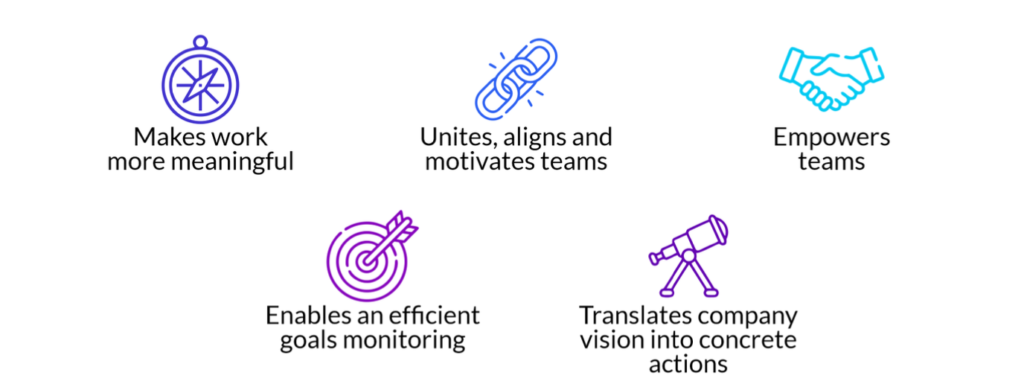
Improved Performance: OKRs create a results-oriented culture, driving teams to focus on achieving meaningful outcomes.
Enhanced Collaboration: with clear objectives & shared key results, teams can collaborate more effectively, leveraging their collective strengths and expertise.
Increased Employee Engagement: OKRs provide a framework for meaningful conversations between managers & employees, fostering a culture of continuous feedback & professional growth.
Strategic Alignment: OKRs create a clear line of sight between the company’s vision & daily activities. The alignment helps avoid goal misalignment and ensures that everyone is working towards the same overarching objectives.
The FACTS of OKR
Focus: with limited objectives, you increase the focus of your goals.
Alignment: OKRs ensure the teams’ daily work is tied to company goals.
Commitment: resources are allocated, and deadlines are set.
Tracking: Keep your target metrics in sight to ensure that goals are met on time.
Stretching: objectives shoot for the moon, striving for what might seem almost impossible.
Implementing OKRs
Organizational Alignment
Establishing strategic objectives, Creating alignment with departmental objectives, Defining key results, Aligning individual objectives, Regular review & feedback, Adjustments & iterations, Communication & transparency, Cross-functional collaboration, Breaking silos & fostering collaboration, Encouraging communication & knowledge sharing, Collaborative approaches to setting & achieving OKRs, Engaging teams in the OKR process, Involving teams in objective setting, Empowering teams to define key results, and Creating a sense of ownership & accountability for OKRs.
Establishing Metrics & Tracking Progress
Identifying relevant metrics, Defining KPIs, Selecting metrics aligned with objectives, Considerations for effective metric selection (Relevance, Measurablity, Actionability, Timeliness, Balance, Contextualization), Tracking & measuring key results, Establishing data collection & tracking mechanisms, Defining measurement methods for key results, Analyzing & interpreting key result data, Regular check-ins & progress reviews, Importance of regular check-ins for OKR success, Conducting effective check-in meetings (schedule regular meetings, prepare an agenda, share updated in advance, encourage active participation), Reviewing progress & discussing challenges (provide updates on key results, assess performance against targets, discuss challenges & roadblocks, seek input and support, and Document action items).
OKR Communication & Transparency
Take employee priorities & goals into account while writing objectives during the planning stage of the OKR cycle, Define OKRs at all levels of the organization & set regular check-in deadlines & share the information transparently, Conduct regular company meetings to review OKR progress & discuss future plans & work out problems/roadblocks, Share the strategy’s progress & results with everyone in the company & be open to feedback & suggestions, As new employees join your team & give them a copy of OKRs to communicate your strategy & emphasize the importance of OKRs, Conduct regular management meetings to review progress on OKR goals for all departments, Share progress with stakeholders outside the organization through presentations or SNS to let customers know how much you value them, Align all users around top-priority OKRs and ensure that communication is open and two-way process.
Overcoming Challenges in OKR Implementation
Resistance to Change
Addressing skepticism & resistance, Communicating the purpose & benefits of OKRs, and Leading by example.
Setting Unrealistic/Vague Objectives
Ensuring objectives are attainable & ambitious, and Defining clear success criteria.
Lack of Alignment & Coordination
Aligning OKRs across teams & departments, and Encouraging collaboration & knowledge sharing.
Tracking & Measuring Progress
Leveraging technology for OKR management, and Monitoring key results & adjusting as needed.
Continuous Improvement & Evolution of OKRs
Learning From OKR Results
Analyzing successes & failures, and Identifying areas for improvement.
Iterating & Refining OKRs
Updating OKRs for the next cycle, and Incorporating feedback & lessons learned.
Scaling OKRs Across The Organization
Extending OKRs to different business units, and Adapting OKRs for remote and distributed teams.