
The #1 reason solopreneurs never get traction with their online businesses is that they aren’t focused on a specific customer. Instead, they are wildly unfocused. Following are 3 different methods to “find your niche” and target a specific audience with a particular problem.
A problem you can solve. A one-person business wins with one niche, 1000 true fans, one big problem, and a differentiated solution.
There are three ways to choose your niche: choosing a sub-niche by the audience, choosing a sub-niche by product or service, or creating your own “niche of one.”
Method 1: choosing a sub-niche by audience
A sub-niche is a smaller subsection of a broad audience. Generally, it works like this: Broad audience – niche – sub-niche. You can apply this formula to the audience you’re looking to attract.
If you’re a personal trainer looking to build an online coaching business, rather than targeting athletes (broad audience), or runners (niche), you could focus specifically on marathon runners (sub-niche).
Method 2: choosing a sub-niche by product or service
You can also apply this to the product or service that you’re creating to arrive at your audience. Instead of your product being a book (broad product), or a cookbook (niche), you could focus specifically on creating a vegan dessert cookbook (sub-niche).
Or, rather than offering a generic service such as coaching (broad service), or leadership coaching (niche), you could focus specifically on leadership coaching for female entrepreneurs (sub-niche).
The result? Once you narrow down to a sub-niche, your audience is more likely to have the same challenges, and therefore the same wants and needs. Once you’ve narrowed it down to your sub-niche audience, you can start learning more about them (Where do they hang out online? What jargon and language do they use? What podcasts & YouTube channels do they watch? Who is already serving this audience i.e. who are your competitors?)
Method 3: creating your own “niche of one”
The most compelling creators online are, what I call, the niche of one. A niche is a unique combination of skills and interests rolled into one idea and then distributed through highly creative or technical content. When you do this well, you own a micro-niche. You become the category creator, the best in the show, the only one. And you can deliver products/services that people will pay for. If you want to do this well, you need to understand the formula and the 6 building blocks behind a niche one.
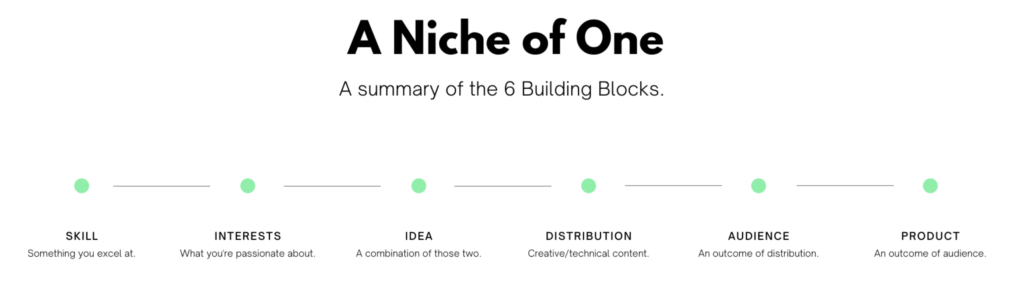
How To Create Your “Niche of One”?
- Pick something you excel at
- Choose something you’re interested in
- Combine them
- Create a distribution system
- Allow an audience to form
- Ask them what they need
Skills: Something you excel at
Most skills, by themselves, are not unique. Lots of people can write, speak English & Spanish, or do financial analysis. Too often, people make the mistake of choosing a skill when deciding to create online (I’m a writer/painter, I know how to do it, I’ll teach people how…) The difficulty arises when the inevitable question comes up: “What do I write about today & What do I paint today, What do I teach today?”
When the brain faces a creative block, people either quit creating or create something subpar. Two poor outcomes, let’s introduce interests into the equation and see what happens.
Interests: What You’re Passionate About
Maybe you’re fluent in English and Portuguese and you’re extremely well-versed in marketing. Maybe you understand financial analysis and your hobby is high-end wine. When you read those sentences, nothing unique or compelling really jumps out. Now? Put them together to formulate a good idea.
Idea: Combine the Above Two
In a niche one, you create one idea and then learn how to do it, do it, or package it 1000+ different ways. Let’s use our examples from above.
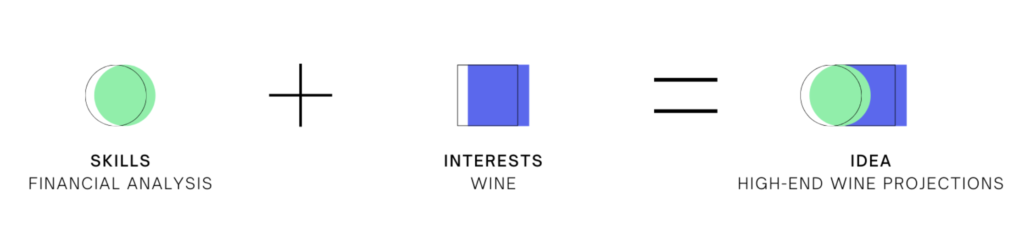
#1: You’re a financial analyst and your interest is in wine. Unique idea: Use your financial knowledge to project the value of one high-end wine bottle each morning.
#2: You’re fluent in English & Spanish and your interest is in marketing. Unique idea: translate one of your favorite company landing pages from English to Spanish using local dialect and slang, every day.
You could easily argue that these ideas are not interesting, but you’d be missing the larger point. They are one single idea that can be produced and reproduced 1000x over. These ideas, when shared broadly through proper distribution, attract a natural audience of interested people.
Distribution & Audience: Create a Distribution System
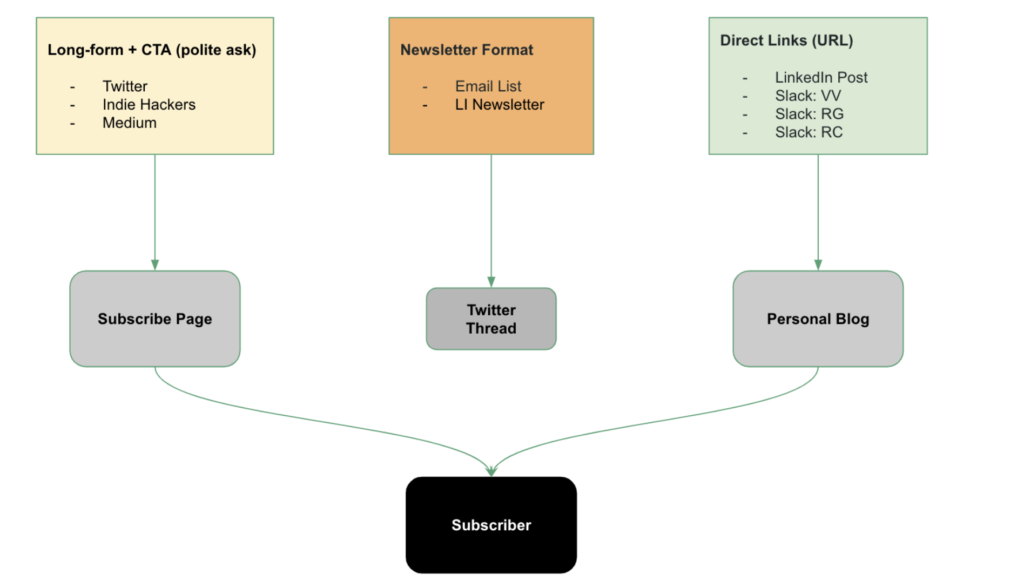
For people to discover your unique and interesting idea, they have to be able to find it. This is where distribution comes into play. Your audience is an outcome of good distribution. Having a niche gives you an advantage because you’ve increased the number of places you can distribute.
Focus on the following channels: personal blog, newsletter, social media, industry sites, and slack channels. By distributing routinely, a natural audience will grow. Remember, you don’t pick your audience, they pick you. You simply set up a system where more people are likely to find you.
Product: Ask Your Audience What They Need
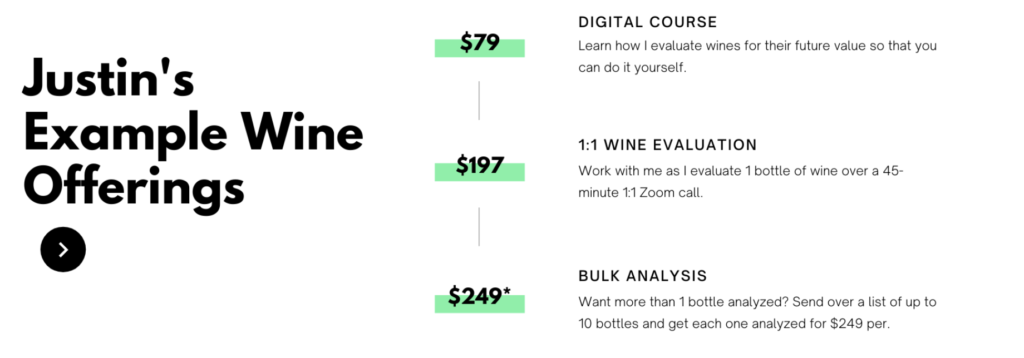
Asking and listening, with an audience built around a specific, unique idea, you can simply start to ask them what would be most helpful and listen to their answers. It’s amazing how many people skip this critical step. Ask on social or send out a survey via email (What would they like to learn? What would they be happy to spend some money on?).
For example: some people may enjoy a digital course teaching them your method behind wine price projections; others may want a 1:1 call where you apply your formula to bottles in their collections. All of this can be placed on a value ladder that people can move up over time.
Summary
In summary, the internet is getting crowded. Picking your passion and then trying to write or record from scratch each day can be a very daunting task. The most compelling creators you see online have a system. Nobody is out here winging it.
So, to get started, do the following: Pick something you excel at, Choose something you’re interested in, Combine them, Create a distribution system, Allow an audience to form, and Ask them what they need.
This is the full guide on choosing a profitable niche.