
What is Distribution?
It refers to the process whereby products/services are sold as well as sent from the manufacturer to the end consumer. When a company begins to operate on a global scale, it will discover that improving its distribution is very necessary if it wants to keep both its customers and distributors happy.
Importance of Distribution
It is essential to the success of a company because, there is no one to oversee and strengthen the relationship between the company’s producers and its customers, so ensuring that the customers get the highest level of service feasible. A continuous feedback loop is crucial for the successful distribution of a product since it helps to guarantee that all parties involved are happy and that any required adjustments are done.
Because of the nature of drop-shipping and online shopping, neither the merchant nor the customer can view the items in person before making a purchase. So the product description and quality images are very important. This requires a distribution system that, in addition to delivering products, also successfully replies to and comments on everything that is transmitted via it.
What is Distribution Management?
The essential activities that must be completed before a product may be delivered to its final consumer are collectively referred to as ‘distribution management’, and include activities as follows:
a. Deliver the product to the destination in one piece requires proper packaging to prevent damage.
b. Inventory management is an important part of distribution management and is one of its key duties.
c. After receiving an order, distribution management must make preparations for the shipment. Stock must be gathered, loaded, and delivered promptly. To proceed, approval must be provided and invoices must be created.
d. Consider the most efficient method of shipping the items for each individual order. The loading and handling processes must be planned out in advance to guarantee that all probable necessities are available.
d. Clear communication, both on-site and remotely, is essential to the operation of distribution facilities. It will ensure the appropriate items are delivered at the appropriate locations and at the right times. If there is a delay in the shipment, distribution management has an immediate duty to tell all of the parties that may be impacted.
What is Marketing Distribution?
In the 4P model of the marketing mix, distribution in marketing works very effectively within the ‘place’ category. The following are some examples of different distribution channels for marketing:
a. A manufacturer could enlist the help of a distributor to make first contact with prospective retailers and market their products to them
b. A vendor may post their goods on an online marketplace for retailers to purchase and sell.
c. Retailers might enhance their revenue by offering a wide selection of products and tactically positioning those products around the store.
d. The creation of an eCommerce store by a wholesaler makes it possible for end customers to place orders directly with the company.
What is a Distribution Strategy?
It refers to the plan that is used to make products and services available to the general populace. When deciding on a distribution strategy, firms take into consideration how much money and time they will save while still generating a reasonable return on their investment.
When planning distribution, it is important to keep in mind the places and ways in which your ideal customer purchases, as well as what you can do to make it easier for them to get your goods. Choosing the distribution method, type, and channel that are most suited for the product being disseminated is often determined by the product itself that is being delivered.
Types of Distribution Strategies
Direct Distribution Strategy
The act of a company selling its products directly to a consumer is ‘direct distribution’. Included in the category of direct distribution channels are modern retail brands. These businesses choose to collaborate with manufacturers that use a single distribution channel for all of their sales and then establish their own retail shops.
Clothing labels, fast food chains, and other types of companies that need quick access to their target market are the kind of companies that employ direct distribution.
Indirect Distribution Strategy
Distribution with several nodes spread out over a longer distribution chain is called indirect distribution. It occurs when a manufacturer sends its products to a C&F specialist, who then sends them to a wholesaler, who then delivers them to the retailer, where the consumer makes their purchase.
Products sold by Pepsi and Nestle, are examples of indirect distribution. Those businesses connect with customers in every region of the world via a distribution system that includes wholesalers, retailers, and other types of distributors.
Exclusive Distribution (Strategy)
Certain items have such a solid reputation that they would profit more from having showrooms that tend to focus on their respective regions.
Why do companies opt for exclusive distribution?
It is often used by companies that place a premium on the prestige of their brand, companies that operate in the luxury market, such as those operating in the fields of car manufacturing, fashion design, and mobile phone manufacturing, stand to gain the most from such a strategy.
Companies that have a distribution monopoly are in a position to exert influence on the price, discounts, and other terms of service that are offered by the middleman. In addition, the firm reaps the benefits of the aggressive marketing that comes as a direct result of having such a limited number of retail stores offering its products.
Advantages of Exclusive Distribution
Increases sales and profits: a commitment to mono branding or exclusive distribution has the potential to accelerate the rise of both sales and the firm. When brands commit all of their marketing efforts to a limited number of distributors, they increase the likelihood that they will achieve commercial success.
Greater attention: manufacturers may get from having exclusive distribution increased exposure. Because of limitations imposed on supply and demand, certain retailers and wholesalers may give some products more priority than others.
Disadvantages of exclusive distribution: increased dependency & disputes leading to huge losses.
Inclusive Distribution (Strategy)
By using inclusive distribution, businesses that have an interest in reaching low-income clients, distributors, and retailers may accomplish their goals.
Why do companies opt for inclusive distribution?
Companies often use this method as a means of interacting with micro-enterprises and solopreneurs who are working within a limited financial framework. The expansion of your consumer base may be beneficial to both your sales and the awareness of your brand in new regions.
Intensive Distribution (Strategy)
When businesses want to boost their sales and expose their products to the greatest number of potential buyers, they turn to intensive distribution. One approach used in this direction is to make their products available in the highest number of retail locations as they can. Convenience stores are more likely to engage in an intensive distribution strategy in the retail setting than other kinds of retailers.
Why do companies opt for Intensive Distribution?
More distribution leads to better sales statistics, but not everyone would profit from intensive distribution. Several aspects to consider when planning this: who you will advertise to, how much it will cost, how large it will be, and how you will promote it.
Advantages of Intensive Distribution
Boost revenue: the results are intuitively straightforward.
Encourages impulse buying: businesses can benefit from fostering impulsive buying under certain conditions.
Product awareness: the rise in consumer awareness that results from widespread distribution is among the most significant advantages of broad distribution.
Disadvantages of Intensive Distribution
Expensive: spreading the word about a product may wind up costing a lot of money.
Low-price margin: products that are easily available, reasonably priced, and do not have a big margin for profit are the ones that make use of intensive distribution.
Controlling retailers: when developing a solid distribution strategy, it may be time-intensive to monitor the activities of several different retailers.
Extensive Distribution (Strategy)
To reach as many individuals as possible, this distribution approach emphasizes mass communication. Utilizing a variety of distribution channels is necessary to ultimately raise consumers’ awareness of a product and communicate with the greatest number of people. When you compare this to selective distribution, in which an organization focuses its efforts on just certain of the available outlets, you have the exact opposite of what extensive distribution intends.
Extensive Distribution Strategy
When deciding if you should use the extensive distribution strategy, consider the following factors:
Type of product: this strategy will be effective for businesses that deal with more commonplace goods.
Budget: you need a substantial financial allocation if you want to try an extensive distribution strategy.
Middlemen: it is necessary to retain the services of middlemen to ensure the uninterrupted flow of goods and services.
Advantages of Extensive Distribution
Wide coverage: the strategy has the potential to bring in thousands of repeat customers if it is executed well and deployed appropriately.
Increased product awareness: it is a good method to get people talking about your goods, which might potentially lead to an increase in sales if you spread the word far and wide.
Disadvantages of Extensive Distribution
Requires more effort: It takes a lot of effort and resources throughout a vast number of retail locations.
Difficult to control: it is difficult for companies to have a firm grip on the market shares.
Selective Distribution (Strategy)
It is a kind of marketing technique. McDonald’s may have 8-10 restaurants in each city, while Gucci may only have a few boutique stores. This is known as ‘selective distribution’, and is only used in a handful of specific scenarios.
Why do companies opt for selection distribution strategies?
Businesses are better able to strategically situate their locations if they have a distribution strategy in place that takes into consideration the specific qualities that are unique to each market. The ability of manufacturers to target certain populations with their pricing strategies is another significant advantage.
Advantages of Selective Distribution
Optimum Market Coverage: Businesses can profit from selective distribution if they want to maximize their market penetration while keeping their expenditures to a minimum.
Consumer Satisfaction: Consumers may expect superior service and product quality standards as a result of the firm’s rigorous selection of a select group of distributors.
Better Communication: it is much simpler for manufacturers to communicate with businesses since they only need to deal with a limited network of business establishments.
Disadvantages of Selective Distribution
Decreased market penetration: expanding a company’s market reach might be challenging because of restricted availability.
Costly disputes: disagreements with distributors might result in significant and expensive delays.
Dual Distribution (Strategy)
It is a strategy that combines direct and selective distribution methods to achieve the objective of expanding market share while simultaneously maintaining direct sales to end users.
Reverse Distribution (Strategy)
It occurs when an item is sent from a customer back to a business and is not very widespread. It is often reserved for the recycling or refurbishing of used goods, such as outdated electronic devices.
What Are Distribution Channels?
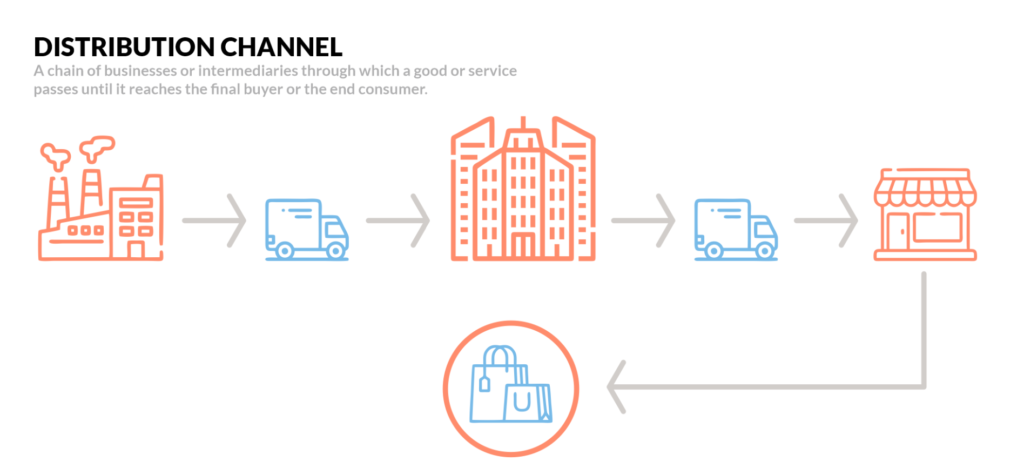
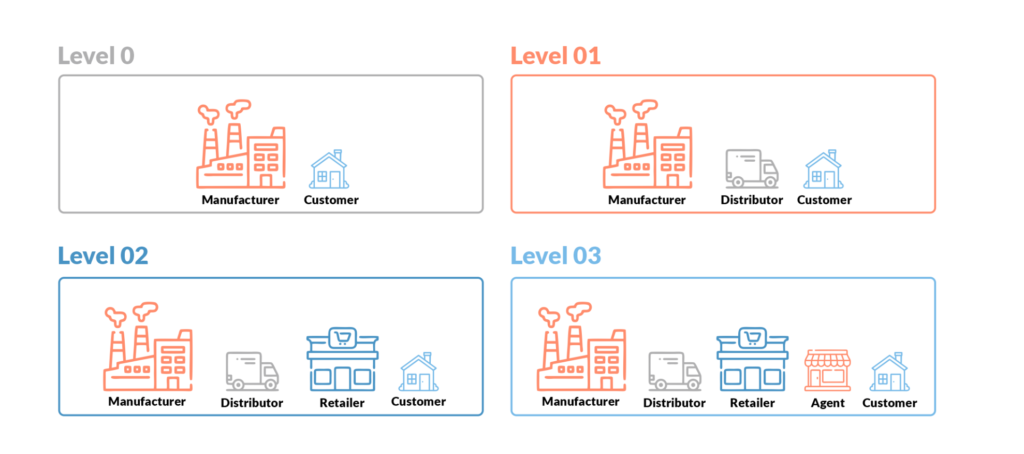
It refers to the route that products and services travel from the point of production to the consumer. Distributors are responsible for the shipping and storage of products before they are sold to retailers. These paths might either be simple or become more complicated as they go.
Distribution Channel vs Supply Chain
The primary goal of distribution strategies is to get the product into the hands of consumers and, more specifically, in front of customers who are ready to buy. There is a possibility that management of the supply chain is required to place a product in front of the correct customers.
It is essential for a company’s continued prosperity that its distribution channel strategy and supply chain strategy remain independent of one another.
Traditional VS Digital Distribution Channel
A digital distribution channel is a kind of marketing channel that allows for the facilitation of electronic contact between a company and its potential customers. There are many various channels available for web marketing, and broken down into two major categories: ORGANIC and PAID.
A crucial step in achieving long-term success in digital strategy is making the switch to owned distribution from distribution via third parties.
Why a Distribution Channel Strategy Matters
The 4Ps (Product/Price/Place/Promotion) are known in the marketing industry and are at the center of a distribution strategy. By using those elements, a company’s revenue growth has the potential to be both accelerated and sustained. In a nutshell, the following components make up a distribution strategy:
a. Having a firm grasp on what their clientele demands
b. Using data to make the shopping experience better for customers
c. Creating innovative products/services that people will be interested in purchasing
d. Planning effective marketing initiatives that will help you reach your ideal demographic
e. Generating interest in the products and services offered
Without a reliable distribution strategy, it is impossible to build a successful business on a strong foundation.
Types of Distribution Channels
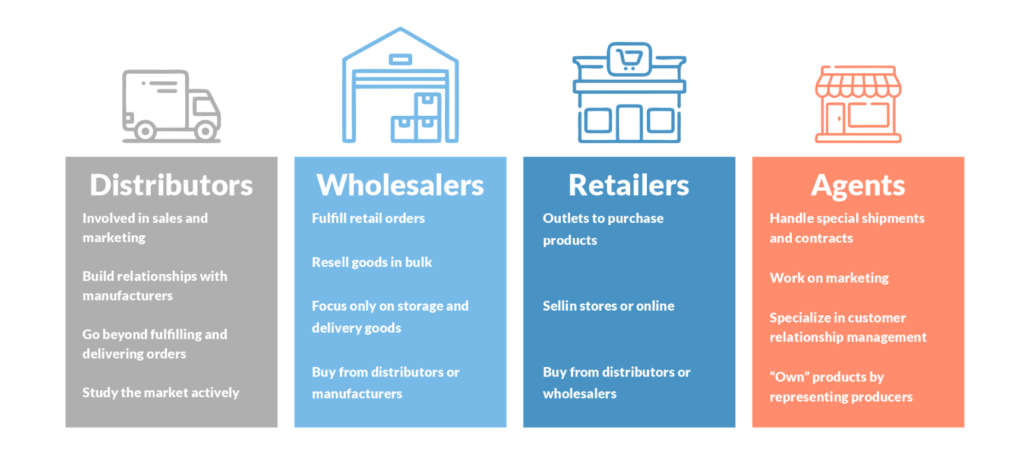
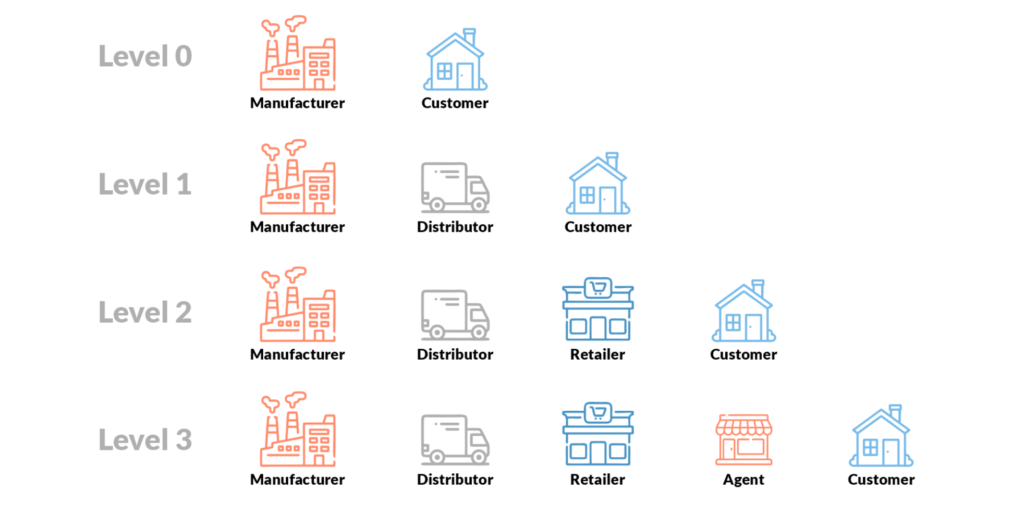
On a larger scale, distribution channels may be further categorized as either direct channels or indirect channels, depending on the situation. The path of distribution may either be direct or indirect, depending on the number of middlemen who are engaged in the process.
Wholesale
It refers to the process through which a wholesaler makes big purchases of items from a producer and then resells those goods to retailers. One of the most effective ways to save costs on things is to make purchases in larger quantities. Wholesalers are considered to be intermediaries since they are responsible for storing and shipping things from the manufacturer to the retailer. Wholesalers have very little direct contact with the end customers.
Retail
It is often the final point of contact before an item is sold to an individual customer. A markup is added to the price that a retailer pays for an item at the wholesale or manufacturing level to generate a profit. Retailers can be found in several virtual forms, including online shops, mail-order catalogs, and even sales over the phone.
Franchisor
It is widely recognized as being among the most unique in the corporate world. When an entrepreneur uses the name or logo of another firm to make income, they are required to pay the company both a fee and a royalty. It is used by several businesses, including fast food, real estate, and even healthcare providers.
The franchising has three primary categories: product distribution franchising, business format franchising, and social franchising.
Distributor
Distributors are helpful because they eliminate the need for a company to have a shipping facility, a specialized staff of drivers, and a complicated logistics network only to transport items from the manufacturer to the retailer. It makes distributors a very important business tool.
An Analysis of Some Distribution Strategy
Apple Distribution Strategy
Distribution strategies for businesses often fall into two categories: direct & indirect. Mostly, it is better to use a mix of direct and indirect methods of distribution. Apple maintains its own chain of retail outlets known as Apple Stores, which are operated by the company directly.
Apple’s Direct Distribution Strategy
It is why Apple Stores are so vital to Apple’s success: they enable the business to sell its products to consumers while placing a focus on providing service and education to those customers. This is why A keeps establishing new stores in a variety of nations all around the world. The stores as well as the direct sales channel are very important for those reasons:
- A sees itself as a design/UX firm, its owned shops are strategically located among the world’s most recognizable landmarks, and they often include stunning architectural designs.
- Because of the ability to educate clients at the stores, pre-sale & post-sale support may be provided at the retail outlet.
- The capacity to sell to other businesses.
Apple’s Indirect Distribution Strategy
A’s distribution strategy is designed to leave buyers with a ‘favorable perceptual-cognitive gap’. The experiences that consumers have when shopping at Astores very certainly contribute to the perception of A that they form. The retail locations are a very tiny part of A’s overall strategy for its stores.
Indirect distribution channels include cellular network carriers, wholesalers, retailers, and resellers.
Coca-Cola’s Distribution (Strategy)
The CC’s business model is supported by the contributions of five main independent bottling partners. These five bottling partners were responsible for contributing 40% of the company’s volume in 2019.
CC’s short-term chain, long-term franchise model: when it comes to the development of its distribution network, CC reply on a broad network of independent bottling partners. It makes a variety of well-considered investments in the operations of bottling companies. As to the long-term, when the bottling partner’s activities gain momentum, CC will minimize its investment while still keeping a minor presence in the firm to guarantee continuing oversight and cooperation.
CC’s distribution system is a combination of the chain model and the franchise model. In the short term, CC operates similarly to a distribution network that is composed of bottlers. In the long run, it functions more like a franchisor, maintaining the majority of the bottling partners’ autonomy while keeping them connected to the CC brand.
Tesla Distribution (Strategy)
Tesla sells its automobiles to individual consumers directly via its website and retail outlets.
Tesla’s Direct-To-Consumer (D2C) strategy
Tesla cut out the middlemen and offered their wares directly to consumers via websites, rather than through the usually traditional distribution channels. Thus lowering its expenses and increasing its profit margins.
Ethereum’s Distribution Flywheel
As the community expands and more creators participate, it attracts an increasing number of new members. When there is a big increase in the number of individuals in an ecosystem, businesses begin to take notice of it and begin investing more money there. That money is then re-invested into the protocol to make it even more efficient. In turn, decreases the prices of gas for developers and users and encourages wider usage of the platform.
B2B2C Distribution Strategy
It is another option for entering the industry. For its success, it must help the brand reach a wider audience via the use of established distribution channels and partnerships with established businesses.
Its eventual customers will be familiar with the name of the brand/service. As a result, the service provider may have more contact with end users. To establish a stable consumer market, the model may be used to strengthen business-to-business interactions. While this reduces its scalability in the short term, it is still possible to achieve with proper execution.
Benefits of Distribution Strategy
Improving the Consumer Experience
A great strategy is the most effective approach to finding out where and how your clients want to purchase your items. This information will aid the sales department as well as the marketing dept and the logistics dept, enabling you to provide better service to your customers.
Increasing Customer Loyalty
A well-planned distribution strategy may not only help save time and improve the efficiency with which things are delivered, but it also has the potential to bring in new customers and keep existing ones.
Reducing Costs
You can cut out costs and save money by picking a distribution strategy that is both cost-effective and compatible with the infrastructure you already have in place.
Open Up New Opportunities
When a company establishes a new distribution channel or extends its operations into new locations, it may become accessible to a wider variety of client demographics.
Increasing Sales
When you set up a great distribution strategy, you provide yourself access to a larger pool of potential customers, which in turn enables you to expand your company more rapidly and boost revenue.
Speed-Up Delivery
There is the potential for the development of a new distribution strategy, one that blends rapid delivery with a direct-to-consumer business model and perhaps the accessibility of an App.
Reduce Out-Of-Stocks
A new distribution strategy is an ideal solution for solving the problem of out-of-stock retail locations.
Achieve Distribution
If a small business with little resources decides to approach a major store with an offer to sell an appealing new product exclusively, the retailer may accept the offer and become the sole distributor of the product.
Burnish a Brand Image
A brand to reach a large consumer base would make an effort to extend its sphere of influence into as many different areas of the economy and distribution channels as feasible.
Block a Competitor
A manufacturer may choose to take either a blocking action or a delaying strategy by aggressively growing its own direct-to-consumer channel of distribution.
Factors to Plan Distribution Strategy
Product Type
Routine: as instances of routine purchases, customers often buy low-priced things such as gum, drinks, and cooking ingredients.
Limited: A laptop/microwave may be an example of limited purchases since they are items with an affordable price that the customers spend more time selecting than they would for a routine purchase.
Extensive: it is the acquisition of anything, such as a vehicle/house/educational degree, etc.
Location of Business
It is a crucial factor to take into account for the distribution strategy. If your firm is located in close proximity to a port or train line, for instance, you may be able to save costs by depending on such infrastructures to carry out distribution rather than employing trucks to do the job.
Location of the Target Market
The buyer/wholesaler/retailer/manufacturer are all considered to be part of the distribution network. It has to take into consideration the location of the end customer, as well as how they interact with other similar products.
Customer Base
Direct distribution channels may take many forms, including digital marketplaces, direct mail, and formal retail shops that are operated by the manufacturers themselves. E-commerce is becoming an increasingly common method of product distribution.
Warehouse
It is important to give considerable thought to the advantages and disadvantages of handling the distribution process in-house vs contracting out the task to a third party.
Transportation Logistics
It is important that how the product will be transported. Without dependable delivery, there is a possibility that the items will not make it to the market on time or will be of subpar quality.
How to Design A Distribution Strategy
Analyze and Define Strategy
Your goals & objectives are important before creating any process, your products and the market you want to sell them in are two examples of areas that need to be analyzed.
Choose Channels and Agents
Partnerships with distribution channels may help companies create an environment that is favorable to both parties, which might result in cost savings. The expenses that are required will be more than made up for by the many benefits, such as an improved reputation for the business.
Create Your Strategy
- Have a look at your current financial situation & evaluate how you’re doing
- To consolidate product info, you need to implement a product info management system
- Maintain open communication between all parties involved in the distribution
- Create a system for tracking how well you’re doing in meeting your goals
- Workers should get training to ensure maximum output
Fix Mistakes
Maintain a close check on the performance of your various sales channels, and if you see any bottlenecks or inefficient processes that might be costing money, make the necessary improvements.
What Techs Aid In Distribution
Automation
Workflow may be sped up and employees’ time can be freed up thanks to the capacity to automate operations.
Internet of Things (IoT)
IoT may significantly increase efficiency, and the use of RFID (radio frequency identification) tracking is becoming more prevalent in modern distribution systems.
Cloud-Based System
Customers can get what they want whenever and wherever they desire thanks to the proliferation of cloud-based distribution systems.
Common Distribution Software Features
Sales Order Management
The capacity to input orders and forward them to production is a function that is often included in order management software. This can be automated.
CRM
Users of CRM systems may have the ability to see customer data in real-time, which enables users to get a deeper comprehension of client preferences, waiting periods for items, and payment options.
Inventory Management
The capacity, shortfall, and on-hand stock views are only some of the inventory management capabilities available to staff. It is helpful for both forecasting & assessing the various stages of the demand process.
E-Commerce
Using the capabilities provided by e-commerce platforms, businesses will be able to set up an online storefront from which they can manage and arrange sales interactions with customers.
Logistics Management
Transportation management and route mapping may be performed more effectively.
Content Distribution Strategy
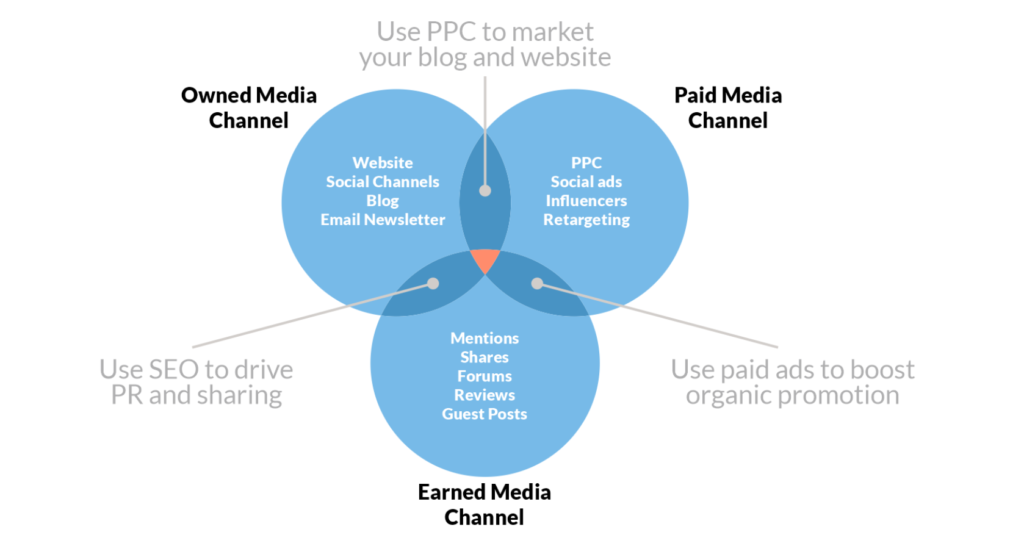
Owned Content Distribution
The content assets of timing and manner of content dissemination, you have total editorial control. An online presence: blog/SNS accounts/newsletter, etc. are some of those assets.
Earned Content Distribution
When someone promotes/spreads your content, they are engaging in what is known as ‘earned’/’shared’ content distribution. Earned channels include SNS promotion, blogs, curated content, online communities, and message boards like Reddit/Quora.
Paid Content Distribution
Pay-Per-Click (PPC) Ads: it is known as PPC advertising, and demands payment when a user interacts with an ad by clicking on it. If it is executed properly, SEM/PPC is a subset and has the potential to be an excellent method for attracting new clients.
Sponsored Content: it refers to promotional materials that are created and disseminated by a person, brand, influencer, or magazine on behalf of an advertiser. When it involves an influencer or a firm that already appeals to your target demographic and buyer profiles, there is a greater likelihood that the sponsored content will be successful.
Paid Influencer Content: This involves forming partnerships with the most influential content creators operating within your sector to increase the level of exposure, traffic, and conversions your company enjoys among the target audience. Influencer marketing is successful because it makes use of time-tested marketing strategies such as social proof and word-of-mouth advertising.
Paid Social Ads: these may take the form of a variety of different formats, such as sponsored posts, paid influencer content, and PPC ads. Through the use of sponsored ads on SNS platforms such as FB/INS, or LinkedIn, you can target a highly specific audience to disseminate marketing messages and run marketing campaigns.
What is a Content Distribution Strategy?
The purpose of the content distribution strategy of a firm is to direct the marketing efforts of the company’s business toward the promotion of the company’s content assets, which may include things like articles, e-books, resources, and so on.
What is Social Media Content Distribution?
It refers to the act of sharing content across an SNS network. It includes posting the content and marketing it. Some of the content may have been created expressly for SNS platforms, while other parts may have been repurposed for use on those platforms.
Content Types for Distribution
E-Books: the most efficient strategy for using E-books is on landing page downloading.
Podcast and Interviews: they are very efficient by publishing on Spotify/Podcasts/Podbean, etc.
Videos: upload videos to video-sharing websites like YouTube/Vimeo and distribute them there.
Infographics: share your infographics on Pinterest.
Case studies/Success stories: develop a section of your website that is dedicated only to the distribution of case studies and testimonials.
Webinars: make use of a webinar as well as CTA inside blog posts to get more content spreading.
Blogs: make use of the blog to get the word out about your published work. You may distribute a newsletter once a day or once a week that provides a synopsis of your recent work.
Content Distribution Channels
Influencer Marketing
It is when you engage with influential individuals or media in your industry to develop, promote, and distribute content, is something that has the potential to be an extremely powerful technique for content amplification. The initial step in the process of influencer marketing is mentioning other individuals in your blog posts, and getting in touch with them to inform them about your link.
Email Marketing
It is the 2nd most frequent mode of content dissemination, tied with SNS in terms of its market share of 18%. Those who have invested the time and effort into cultivating an email list have the opportunity to utilize that list to distribute their work’s content to an audience that is more likely to read/interact with it.
Social Media (Organic)
Social media is the obvious victor owing to its enormous user base and cheap cost per click. The vast majority of businesses at least share a few content on SNS such as FB/Twitter/LinkedIn. In addition, less well-known social networking websites such as Pinterest may provide a significant amount of traffic to your website.
Guest Blogging
It accounts for 16% of all content distribution in terms of market share. Blogging on other websites, also known as guest blogging, is a popular method for increasing online exposure and generating brand awareness. Elevating your online profile is all that is required to boost your sales leads, increase your chances of attracting new consumers, and advertise your company.
Paid Distribution
It accounts for 14% of all content distribution. The amount of paid distribution is a very small part of the whole, even though its popularity may assist you in attracting a greater number of people who fit the profile of your ideal audience.
Internal/Employees
Some companies are making use of the social media followings of their employees by having those employees share the content created by the company. The group includes those whose jobs include communicating with customers or clients, such as sales, HR admins, account managers, and others.
Distribution Platforms
The usage of content distribution platforms is a unique method for the distribution of content. Yet, they have not achieved general adoption. One example of this is Quuu.
Why Content Distribution Is Important?
- It not only helps your content reach a larger audience but also improves the effectiveness of your content generation and curation, which is a double win.
- Being on the same page as your team and any other group that they are working with on the production and delivery of content is beneficial.
- It lays out benchmarks against which the results of distribution may be analyzed and assessed. You will be able to measure the performance of your content by defining a strategy for how it will be shared and promoted, and then adjust your efforts by the strategy.
How to Build a Content Distribution Strategy?
Research Your Target Audience
1st thing you need to do is collect demographic data from customers/email subscribers/people who follow you on SNS, and those who visit your website. Consider the target audience you are writing for (age/income/location/education, etc.), you can get that information via Google Analytics.
2nd step is to get input from customers/email subscribers/followers on SNS in direct conversation.
With these two pieces of data, you can build a model of your ideal customer. Your buyer personas should serve as models of your target customer and content audiences as you continue to design the other parts of your content distribution strategy, which reflect the interests & motivations the customers have.
Audit Your Content
- Ensuring a record of your accomplishments is maintained. The logging of your content may either be done manually or automatically. The content may be crawled and gathered with the help of Screaming Frog and other similar tools, and the info (URLs/Titles/Descriptions) can then be put into an Excel document.
- Analyzing the impact that your work has had. The length of the content, the number of SNS shares it received, and the number of backlinks it has can be viewed in the SEMrush report. You will able to assess, with the help of those statistics.
- Determining the areas in which your content is lacking. You can do Keyword research to uncover relevant keywords and phrases to add to your content and enhance its SEO rankings for more terms. The Content Gap tool from Ahrefs is very helpful on this.
Choose Distribution Channels
Be sure that the channels where you publish your content are consistent with the routines and habits of the people who make up your target audience. Your SNS profiles, email newsletter, and blog are all examples of owned distribution channels that can be readily and economically improved upon by you.
During the process, it is essential to educate yourself on organic social media marketing, polish your email newsletter distribution strategy, and refine your abilities in composing email newsletters.
Decide Content Types
All the content has the potential to be published on its blog, where it is then able to be readily revised and distributed to a variety of different audiences. Blogs are available to anybody and everyone, may be used several times without any further work, can be translated into a variety of languages, and can be distributed quickly. More than half of consumers visit a company’s blog before deciding whether to make a purchase or not.
Select Content Distribution KPIs and Goals
KPIs: Traffic/Reach/Unique page views by channel and source; Engagement & Bounce rate, average time on page; Impact & Click-throughs/conversions/backlinks; Sentiment & Comments, Social Shares; Top content/Falling Content/Top page views, top exists, etc. Make use of these indicators while coming up with SMART goals for your content as the following:
Specific: notice the increase in the amount of traffic that comes to us via organic search results. Measurable: such as 30 fresh inbound links; Attainable: such as 30 new backlinks each month; Relevant: it fits in perfectly with our overall strategy for organic content marketing, and it has the potential to boost our earned media via more attention by bloggers; Time-bound: within the next month, finish xx targets.
Build An Editorial Calendar
To achieve success, substantial planning is required. It is another reason why having an editorial content schedule might be useful. Your content distribution strategy helps your team stay on the same page, and an editorial calendar helps your team work toward the same goals.
Create Your Content
Carrying out a content audit, deciding your distribution channels and the types of content you will be publishing, and developing an editorial calendar.
Distribute & Market Your Content
You should publicize your newly published content via the channels you’ve chosen and in line with your editorial calendar. Pay attention to the guidelines provided by each site to get the most out of postings.
Measure & Analyze Results
Analyze how successful it was by utilizing a variety of different sites and mediums, such as GG Analytics, where your blogs will be shown. Establish a regular routine for monitoring & reviewing your success to be able to evaluate your progress and make objectives based on data you can improve.
Content Distribution Tools
Hubspot
It is a CRM solution that can be used by companies of any size. You can use it for a variety of marketing purposes, including email marketing, analytics, content development, SNS promotion, etc.
Medium
It is a platform for info sharing that is used by a variety of users, from individual bloggers to large corp, to distribute their content. It may either take the place of your regular blog or be used in conjunction with it to reach the largest number of individuals with your content.
PR Newswire
It is easier to get in touch with journalists and media organizations that focus on a certain industry, topic of interest, or geographic area. There are packages available for purchase that include not just regional and national newspapers, but also state and local periodicals.
HARO
Help a Reporter Out (HARO), is a website that acts as a conduit for contact between journalists and the sources of their stories. You’re going to be the source of information in this case. As a member of HARO, you’ll get emails regularly, including requests for comments from various journalists. If you provide answers to the questions, an interview with you may be conducted for a piece that may be published in the future. It has the potential to assist you in gaining publicity in the media and inbound links.
ClickToTweet
Your readers can swiftly and simply tweet pertinent portions from your articles with the use of CTT. You are the people who generate the content excerpts, and CTT provides the link. The users just have to click that link for the software to start Twitter with the content excerpts filled in.
GaggleAMP
It is a social media distribution platform, you can gather the social networks of its workers and instantly broadcast them to those networks with content related to the business.
AddThis
It is a social sharing plugin that can be installed straight on the website and goes to work immediately. Visitors can effortlessly share your posts with others without leaving your site. Share buttons from AddThis can also be included in an email newsletter, as well as any other material you create.
Mention
It is a social media monitoring software that assists with a wide variety of tasks, including listening to and publishing on social media, as well as responding to crises. You’ll be able to monitor and respond to people who talk about your company, its content, and its SNS channels when you use Mention.
SharedCount
It allows you to monitor the reach of your social network postings as well as the interactions they get. As soon as you input a URL, SharedCount will generate a report that provides info on the total number of likes, shares, comments, and other engagement indicators.
Outbrain
It allows you to have material aggregated at the end of other people’s articles for a price. You may establish a content campaign that will be featured on it with other pieces that are similar to yours by giving it either an RSS feed or a set of URLs. It enhances the probability that people will click through to read your work. It has a broad number of partners like the New York Times and Mashable.
WiseStamp
It is a handy email add-on that allows you to put a link to the most current blog posts or news stories in your email signature. WS allows you to maximize efficiency by minimizing wasted digital real estate.
Conclusion
Creating an effective distribution strategy requires juggling a lot of moving components at once. The optimum distribution strategy for your firm will change based on several factors, including the features of your products, your target market, and the infrastructure you have in place.
Although distribution strategies may vary greatly based on several different conditions, it is important to constantly take into account the level of customer demand as well as the level of complexity of their purchasing decisions.